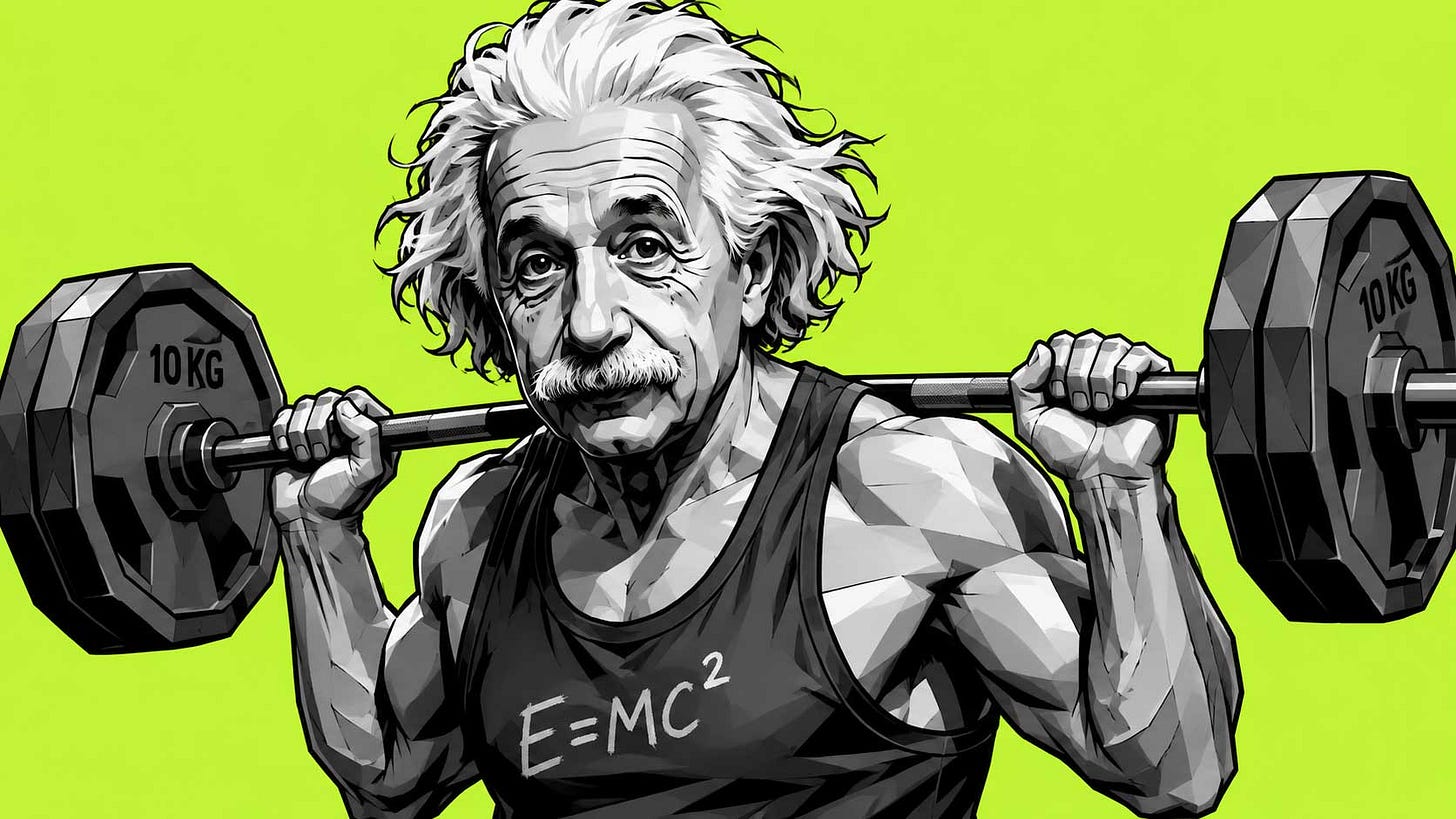
I’ve said this for years, so many times that it’s basically become a personal motto: imagination and graft matter more than knowledge and talent. Not that knowledge and talent don’t matter at all (of course they help) but on their own they’re not enough. It’s what you do with them, and how hard you’re willing to work at it, that decides the outcome.
Take talent first, because it’s the one people get most precious about. I’ve never thought of myself as the most naturally talented person in any room I’ve been in. What I’ve had instead is a willingness to graft: to put in more hours, ask more questions, redo the work one more time than felt necessary. And over and over again, I’ve watched that overtake raw talent. The naturally gifted person coasts because things have always come easily to them. The person who has to work for it builds a habit of working for it, and that habit doesn’t switch off. It compounds. Give it a few years and the “hard worker” has quietly gone past the “talented” one, because they never stopped training the muscle that actually matters: showing up and doing the graft, even on the days it’s boring or hard or unglamorous.
There’s decent research behind this, as it happens, not just my own experience of it. The psychologist Angela Duckworth spent years studying who succeeds and why (at West Point, in the National Spelling Bee, in classrooms) and found that a trait she calls “grit,” sustained passion and perseverance for long-term goals, predicted achievement better than IQ or talent did. Her line is that “effort counts twice”: once to turn talent into skill, and again to turn skill into achievement. Talent, in other words, is only ever half the equation, and it’s the less important half. Carol Dweck’s research points the same way from a different angle. In her studies with children, the ones praised for being “clever” started avoiding hard problems in case they stopped looking clever, while the ones praised for their effort kept picking the harder problem, kept improving, and kept enjoying it. Praise the talent and you get someone protecting an image. Praise the graft and you get someone who’s still building at forty.
Now imagination, which I think is the more interesting half, because it’s the one people underrate. Knowledge without imagination is just a pile of facts sitting there doing nothing. Einstein’s famous line gets thrown around a lot, usually stripped of its context, but the fuller point he was making holds up: knowledge is what you’ve already got, imagination is what lets you go beyond it: spot the connection nobody else has spotted, picture the thing that doesn’t exist yet and work out how to build it. That’s been true in pretty much every part of my working life. In design, in campaign work, in proposition and strategy work, the knowledge (the brief, the data, the category conventions) only gets you to the starting line. Everyone in the room usually has access to roughly the same knowledge. What separates the work that actually lands from the work that doesn’t is the imaginative leap: the angle nobody else thought to take, the way of framing a proposition that makes it suddenly obvious, the bit of lateral thinking that turns a flat brief into something people remember. That’s not a knowledge problem. That’s an imagination problem, and it’s solvable by anyone willing to sit with it long enough.
And imagination isn’t some fixed gift you’re either born with or not. It’s trainable, the same way graft is a habit. There’s research on design students that backs this up directly: students further into their design training scored significantly higher on divergent thinking (generating lots of novel ideas) than students just starting out or students outside design altogether. The implication is exactly what you’d hope: creative thinking develops with practice and deliberate exposure to problems that demand it. You’re not stuck with the imagination you started with.
The place this has clicked most for me outside of the day job is coaching. I’ve coached basketball, and I’ve taught people to ski, and neither of those is really about how good you are yourself. It’s about how creatively you can get inside someone else’s head and find the way in that works for them. Some players need the technical breakdown. Some need a metaphor. Some need you to make it a game so they stop overthinking it and just feel it happen. On skis, half the battle with a nervous beginner isn’t teaching the mechanics of a turn, it’s inventing some way to get them to stop bracing and trust their edges, and the “correct” textbook explanation almost never does that on its own. You have to imagine your way into a completely different explanation, sometimes on the spot, because the first one didn’t land. That’s imagination doing the actual work of teaching, not knowledge. I could know everything there is to know about ski technique and still fail to get someone down a blue run if I can’t imagine a way to make it click for them specifically.
So that’s the philosophy, and it’s not really a motivational-poster line for me. It’s more or less how I’ve had to live and work. Knowledge you can look up. Talent you either have or you don’t, and either way it runs out of road on its own. Imagination and graft are the two things you can always choose to bring, whatever room you’re in, whatever you’re starting with, and in my experience, they’re the two things that actually decide what happens next.
Further reading on the research mentioned above:
Quote Origin: “Imagination Is More Important Than Knowledge”: Quote Investigator on the full quote and its 1929/1931 sources
Grit Trumps Talent and IQ: National Geographic on Angela Duckworth’s research
Carol Dweck: praising intelligence costs children’s self-esteem and motivation: Stanford summary of the effort-vs-talent praise studies
Design Training and Creativity: Students Develop Stronger Divergent Thinking: PMC study on trainable creative thinking