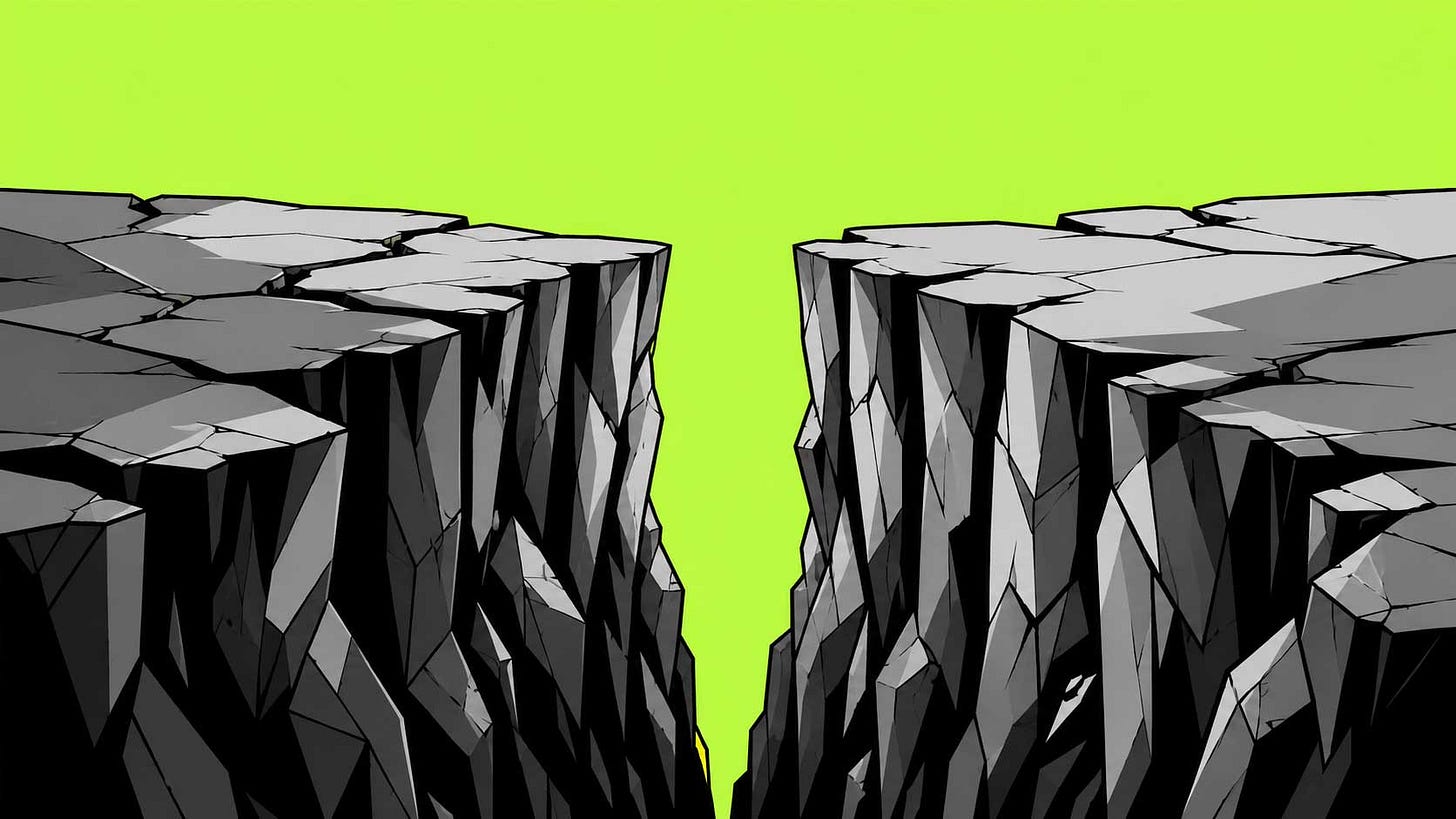
Sport’s audience has already moved. It’s gone culture-led rather than channel-led, following people and stories rather than crests, discovering new teams and athletes through a clip on a phone rather than a fixture list. Most rights holders are still built, in their brand and their content as much as their data and infrastructure, to reach a fan who doesn’t watch, follow or spend that way any more.
That gap is what I call the fandom chasm. It’s where budgets get wasted, sponsors get frustrated and growth stalls, and it doesn’t close by fixing one thing. It closes in four places at once.
Brand Salience. Not a logo refresh. It’s whether a fan thinks of you first, unprompted, in the moment they choose where to spend their attention or their money, and that only comes from genuine cultural relevance, not a demographic profile. Even the Premier League, with the biggest audience in world sport, spent 2026 rebuilding its own identity because reach alone hadn’t kept it front of mind. If they still need to fight for salience, everyone else does too.
Consumption. How fans actually watch, discover and follow now, not how the organisation assumes they do. Attention has fragmented across streaming platforms and gone short-form and creator-led. Understanding that shift properly, rather than reacting to it a year late, is half the battle.
Data. The first-party record that makes everything else provable. Without it, you can’t personalise anything, and you can’t prove a sponsor’s value to an audience you don’t actually hold the record of. It’s the connective tissue, not the headline act.
Revenue. Sponsorship, partnerships, D2C, media IP: commercial structure built on what the first three actually tell you, not a single line item hoping the rest sorts itself out.
None of these four work in isolation. A brand with no data behind it can’t prove what it’s worth. Data with no brand behind it has nothing distinctive to personalise. Revenue built on neither is just hope with a forecast attached. The point where all four overlap, the small green dot in the middle of that diagram, is where the fandom chasm actually closes. That’s the work.